Need home furnace repair in Hubbard?
Tell us what your system is doing. Send an estimate request and a local provider in our network will follow up. No obligation, and you choose who to hire.
No obligation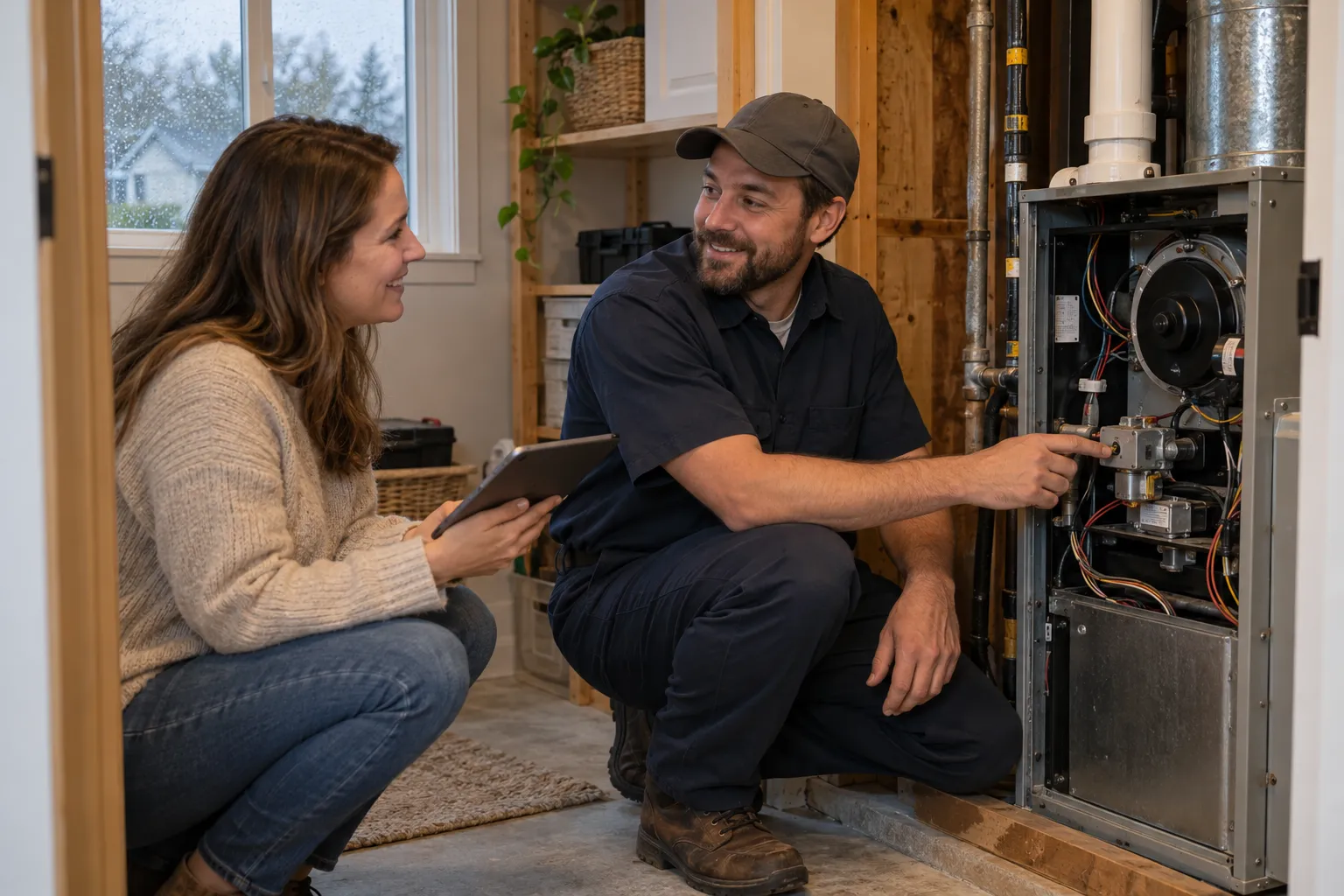
Request an estimate today
Say you come home to a cold house and a furnace that will not start. The air is damp, the rain is steady, and the floors feel chilly. You want answers, not a sales pitch.
Marketjordan Heating & Air is a referral service. We do not repair furnaces. We connect homeowners in the Hubbard area with independent local providers in our network who do the work. This page walks you through safety steps, simple checks, common repairs, and what to ask before you hire. Ask before you hire, and you will feel steadier about the choice. Request an estimate, or use Request a callback to check provider availability.
Say you walk in and notice a rotten-egg smell near the furnace. Do not flip switches. Do not light anything. Leave the house with your family and pets.
From outside, contact your gas utility or emergency services. Wait for the all-clear before you go back in. A furnace provider can look at the system only after the gas issue is handled.
Headaches, dizziness, or a alarm going off are not normal. Get fresh air and call emergency services. Do not wait to see if it passes.
Say the house is cold but nothing smells odd. A few simple checks can save you a visit, or give a provider useful clues.
If these do not help, stop there. Do not open the furnace panels yourself.
Say your heater runs, but the house never gets warm. Or it kicks on and off every few minutes. Those are common clues.
Banging, squealing, or grinding are not normal. A soft hum is fine. A loud scrape is a reason to switch the furnace off and ask a provider to look.
In our damp climate, moisture and moss can also affect outdoor vents and crawl space ducts. Mention this to the provider.
Say a provider arrives at your door. A good visit has a clear flow.
They ask about the symptoms. They check the thermostat, filter, and airflow. They inspect the burners, ignition parts, and safety controls. Then they explain what they found in plain words.
A fair provider tells you the problem, the options, and the price before starting. Ask for it in writing. If they cannot explain it simply, that is worth noting.
Many heating problems come down to a short list of parts.
Say your furnace is old and the repair bill keeps growing. That is when you weigh your choices.
Furnaces often last 15 to 20 years with care. If yours is near that age and the repair is a large part of the price of a new unit, replacement may make sense. A cracked heat exchanger is a safety issue and usually points to replacement.
If you are searching for furnace replacement near me, ask the provider for both options in writing.
This is the part many homeowners skip. Good questions protect you. Here is what a solid answer sounds like, and what should make you pause.
A good answer is a clear yes, with details you can check. Be wary of vague replies or pressure to skip paperwork.
A good provider says yes and lists parts and labor. Be wary of a price that changes with no explanation.
You should know who is coming. Be wary if nobody can say.
We make the connection. Independent providers in our network handle the diagnosis, repair, and pricing. Availability and call hours vary by provider, so Request a callback to check provider availability, or send a request first.
A provider checks the thermostat, airflow, burners, and safety controls to find why your heat stopped.
Ignitors, sensors, and blower parts are common fixes done on site when possible.
Providers look at venting and heat exchanger condition to keep your home safe.
Ask for a written quote that explains parts, labor, and any other options before work begins.
Prices depend on the part, the furnace age, and your home. These are typical U.S. ranges only. Always ask the provider for a written quote before work starts.
| Item | Typical range | Notes |
|---|---|---|
| Diagnostic visit | $75 – $200 | Often credited if you approve the repair |
| Ignitor or flame sensor | $150 – $450 | Common cause of no-heat calls |
| Blower motor | $450 – $1,500 | Varies by motor type |
| Capacitor or control board | $150 – $800 | Parts differ by brand |
| Thermostat replacement | $150 – $500 | Smart models cost more |
| Duct sealing repair | $300 – $1,500 | Depends on access, like crawl spaces |
Share your furnace issue and home details through the estimate form. It takes only a few minutes.
We connect you with an independent provider in our network who serves your area.
Ask your questions and get the scope and price in writing.
Approve the work only if you are comfortable. There is no obligation.
We only make the connection. Independent providers in our network do the work and set their own prices.
Simple questions and clear red flags help you judge any provider.
Providers know damp, wood-frame homes and crawl space ducts.
Request an estimate and decide on your own terms.
Tell us what your system is doing. Send an estimate request and a local provider in our network will follow up. No obligation, and you choose who to hire.
No obligationCheck the thermostat, breaker, and filter first. If the smell of gas is present, leave the home and contact your gas utility. Otherwise, request an estimate from a local provider in our network.
Most repairs fall between about $150 and $1,500 in the U.S., depending on the part. Costs vary by job, so ask the provider for a written quote first.
If your furnace is over 15 years old and needs a costly fix, replacement may be wiser. Ask the provider to price both options in writing.
Tell us what your system is doing. Send an estimate request and a local provider in our network will follow up. No obligation, and you choose who to hire.
No obligation